
White County Civil Docket Searches
The clearest public index for civil cases is the White TnCIS search. It covers Circuit Court and General Sessions. Start by marking Civil and picking the correct court. Court Office is required no matter what. Year and case number help, since a broad search can hit the 2,500-row limit. Party Name takes either a full name or a case reference. They share one field.
Once an entry opens, compare the court, year, and number before trusting it. The clerk-linked docket categories cover General Sessions Civil, Circuit Civil, and Child Support. Check the Prepared Date too. The publisher updates dockets only as needed, and delays happen. For a current court date or an official copy, call or visit the right clerk.
- Decide whether the case is Circuit, General Sessions, or Chancery.
- For Circuit or General Sessions, choose Civil in White TnCIS.
- Search by a full party name, case reference, year, or numeric suffix.
- Compare the result with the dated published civil docket.
- Request the exact pleading, order, or judgment from its custodian.
White County Has Two Clerk Routes
Civil records for Circuit and General Sessions live with Circuit Court Clerk Beverly Jolley. Her office is at 111 Depot Street, Suite 1, Sparta, Tennessee 38583. The county lists 931-836-3205. Monday through Friday hours are 8:00 a.m. to 5:00 p.m. Her office keeps the records and minutes for both courts.
Chancery is a different route. Clerk and Master Gena Brock sits in Room 303 at 1 East Bockman Way, Sparta, Tennessee 38583. She is reachable at 931-836-3787. The White TnCIS search screens show no Chancery option. So probate, trust, guardianship, and related equity records should not be expected there. Ask the Clerk and Master which index and request method applies.
Civil Dockets: What They Show
Think of a civil docket as a running index of case activity. It may list the court, caption, parties, and case number. Filing dates, event descriptions, future settings, and disposition status may appear too. Its real value is sequence. You can see that a complaint came before service. You can see that a motion preceded a hearing, or that an order followed a setting. What the short entries cannot do is reproduce what those documents actually say.
| Case identity | Court, year, case number, caption, and parties. |
|---|---|
| Filings | Dated entries for complaints, answers, motions, and orders when indexed. |
| Settings | Hearing, motion, status, trial, or other scheduled event. |
| Disposition | A recorded closing event, which should be checked against the judgment. |
| Access note | Sealed or protected material may be withheld or redacted. |
For proof of service, exact pleading text, an exhibit, or a signed judgment, the complete file is the better source. Ask the clerk for a named document. Say whether you need a plain or certified copy.
White County Circuit Civil Snapshot
The Tennessee AOC FY25 report counted 77 White County Circuit civil filings and 74 dispositions for July 1, 2024 through June 30, 2025. Those figures cover Circuit civil only. General Sessions, Chancery, Juvenile, municipal, criminal, and federal courts are excluded. The totals give context, but they identify no case.
The year before, FY24, showed 69 filings and 66 dispositions. Category changes and report timing make it risky to draw sweeping claims about the county from these numbers alone. The FY25 disposition table breaks down as 24 dismissals, 22 other dispositions, 13 compromises or settlements without hearing, 10 court-approved settlements, and 5 uncontested or default dispositions. None of it reveals any named case.
What Cases Fill the Civil Docket
Reported Circuit categories show the spread of civil work in White County. Contract and debt claims, damages or torts, and divorce all appear. Administrative appeals, real-estate matters, adoption, guardianship, domestic relations, and other general civil matters also show up. General Sessions carries its own limited civil jurisdiction. The county publishes no official White County dollar cap. Confirm the current limit with the Circuit Court Clerk. Do not rely on a generic Tennessee figure.
- Contract, debt, and specific-performance disputes
- Damages, torts, and real-estate matters
- Divorce and other domestic-relations cases
- Administrative and lower-court appeals
- Guardianship, probate, trust, and Chancery matters
Custody and family filings can hold protected personal data. A docket entry may be public while part of the underlying document is sealed or redacted. Juvenile proceedings follow a separate, sensitive route.
White County Judgments Have Two Homes
A recorded judgment and a court case file answer different questions. The White County Register of Deeds lists judgments and court orders among the instruments it may record. That land-record copy can help trace notice or a property-related instrument. It is not the lawsuit. The originating court clerk keeps the pleadings, docket history, and judgment in the case file.
Start with the court when you want to know what was filed, what the judge ordered, or whether a judgment is certified. Use the Register of Deeds when the question is whether an instrument was recorded in county land records. Neither office substitutes for the other.
The same caution applies to old records. White County Archives, in Room 304 at 1 East Bockman Way, assists with historic civil, divorce, and probate research. The Clerk and Master next door in Room 303 handles current Chancery work. Same address, different collections.
Hearings on the Civil Docket
A civil setting can serve many purposes. It may be a motion, a status review, a settlement matter, a pretrial conference, or the trial itself. Don't assume it is the trial date. Only the event label or a court instruction can tell you that. Tennessee Supreme Court Rule 18 lets local rules govern settings, continuances, motion deadlines, and other trial-court practice. White County does not publish a current local-rule packet. So guess at no notice period or motion deadline. Check the Prepared Date printed on the docket list first. Then compare the setting against your summons, notice, scheduling order, or instruction from counsel.
A continuance only happens when the court approves it. Filing a request moves nothing by itself. The original obligation stands until an order issues. The White County court schedule process walks through how to confirm a changed court date. One more caution applies. The generic county events calendar is not a court calendar. Commission meetings and administrative agendas may discuss court budgets. They never publish the civil case call.
White County Civil Copy Costs
What does a copy cost? The AOC General Manual cites 50 cents per page as a state reference. It covers one plain-copy category under Tennessee law. That figure is not a White County fee sheet. The clerk sets no posted schedule for certified copies, exemplified copies, docket sheets, images, searches, or staff research. So ask the proper office for an estimate and its accepted payment method before you authorize any copying. A strong request earns a faster answer. Name the court, the case number and year, the caption, the date range, and the exact item you want. Say whether you seek inspection, a plain copy, certification, a transcript, or an audio recording. Tennessee Rule 26 treats official recordings differently from transcripts. It carries its own state rates. Access still depends on whether an official recording was made and kept at all.
A records request does not file a pleading or preserve a legal deadline in a White County civil case.
Who Can See Civil Dockets
Who may read a civil docket? Tennessee Supreme Court Rule 34 sets the framework for public access to court records. Access still bends to statutes and court orders. Redaction, security, and confidential-record rules also apply. Domestic, medical, juvenile, adoption, and other sensitive material can stay off limits. That is true even when the case index or basic docket is open to view.
Use the right layer. TnCIS is a public informational index, the dated docket is a calendar list, and the clerk-held file is the official record.
Ask the custodian whether a restricted file can be inspected in part or supplied with redactions.
Several channels lead to a White County civil docket. You can use White TnCIS, the statewide multi-office TnCIS search, or the clerk-linked docket list, and you can reach the Circuit Court Clerk by phone or at the counter. Chancery matters go through the Clerk and Master. The offices post no mail or copy-delivery procedure, so get instructions directly before mailing any request.
White County Civil Source Images
The county events calendar illustrates a common routing trap.
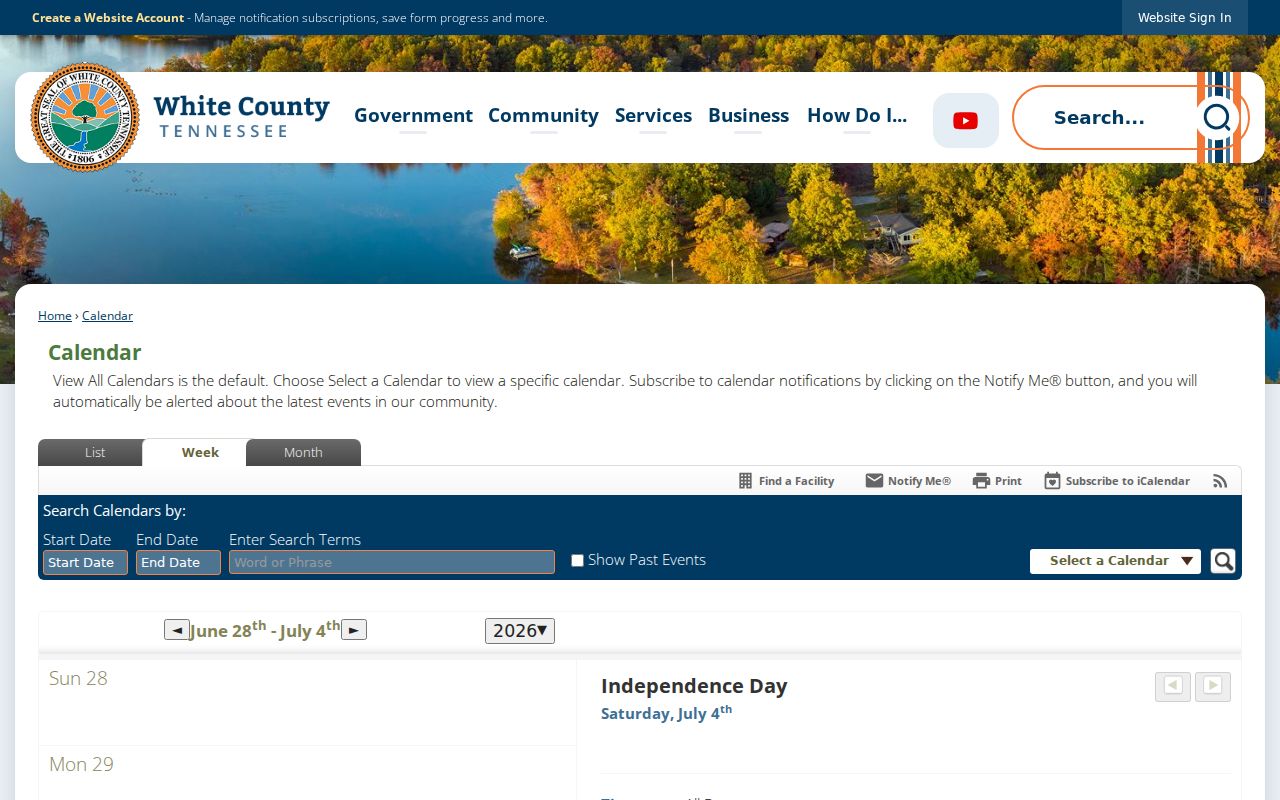
Treat it as an administrative calendar only. It is not a dependable civil hearing docket. The official White County Archives page identifies where historic records fall back to.
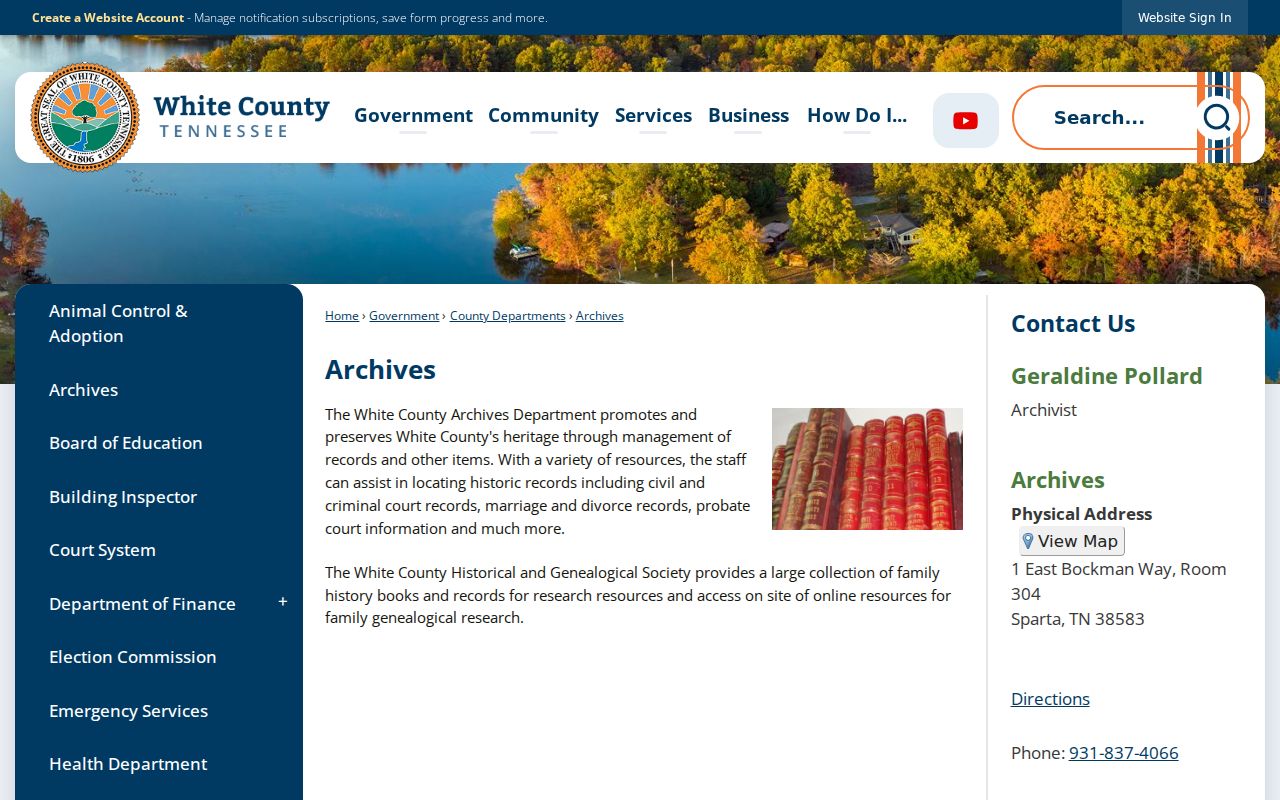
Archive help counts when a civil case predates the online index. The Tennessee courthouse directory sorts out the local court locations.
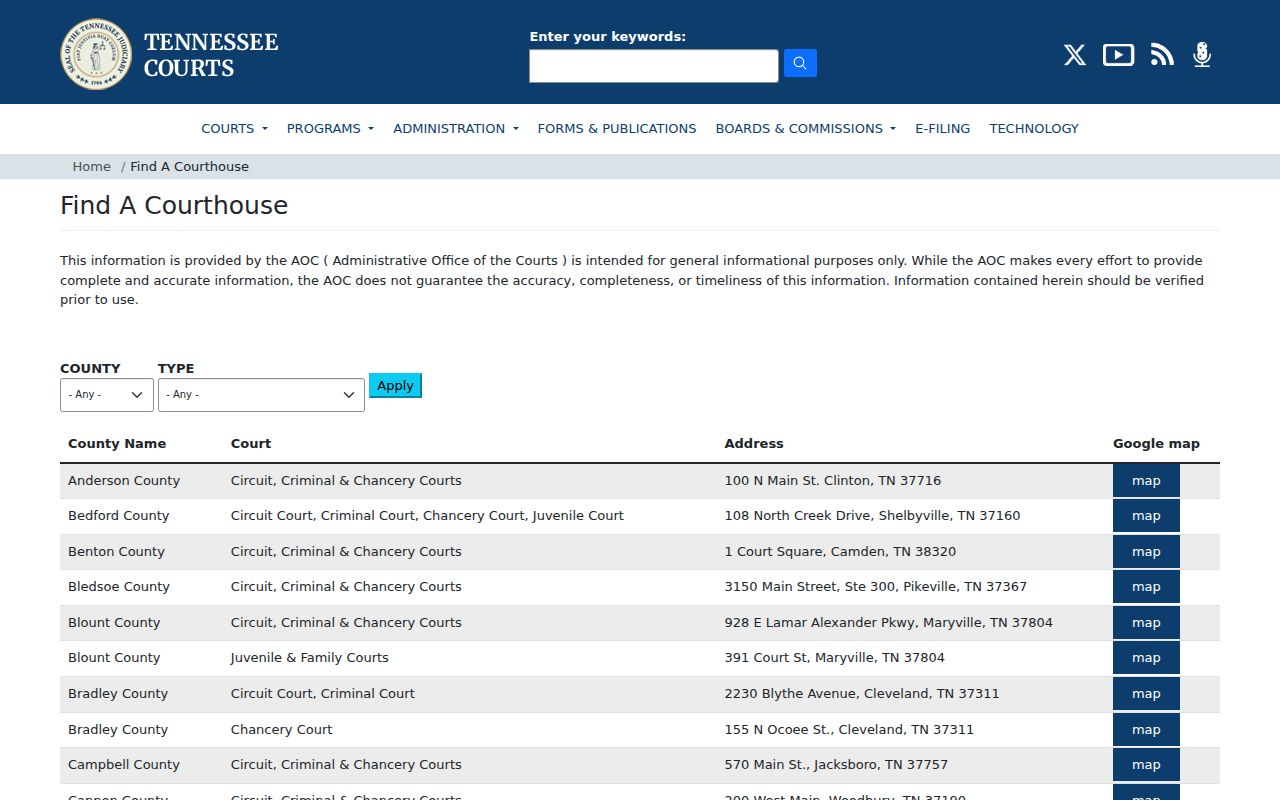
Use the directory to pick the right building: Depot Street for Circuit work, East Bockman Way for Chancery. The 13th Judicial District page adds the district context.
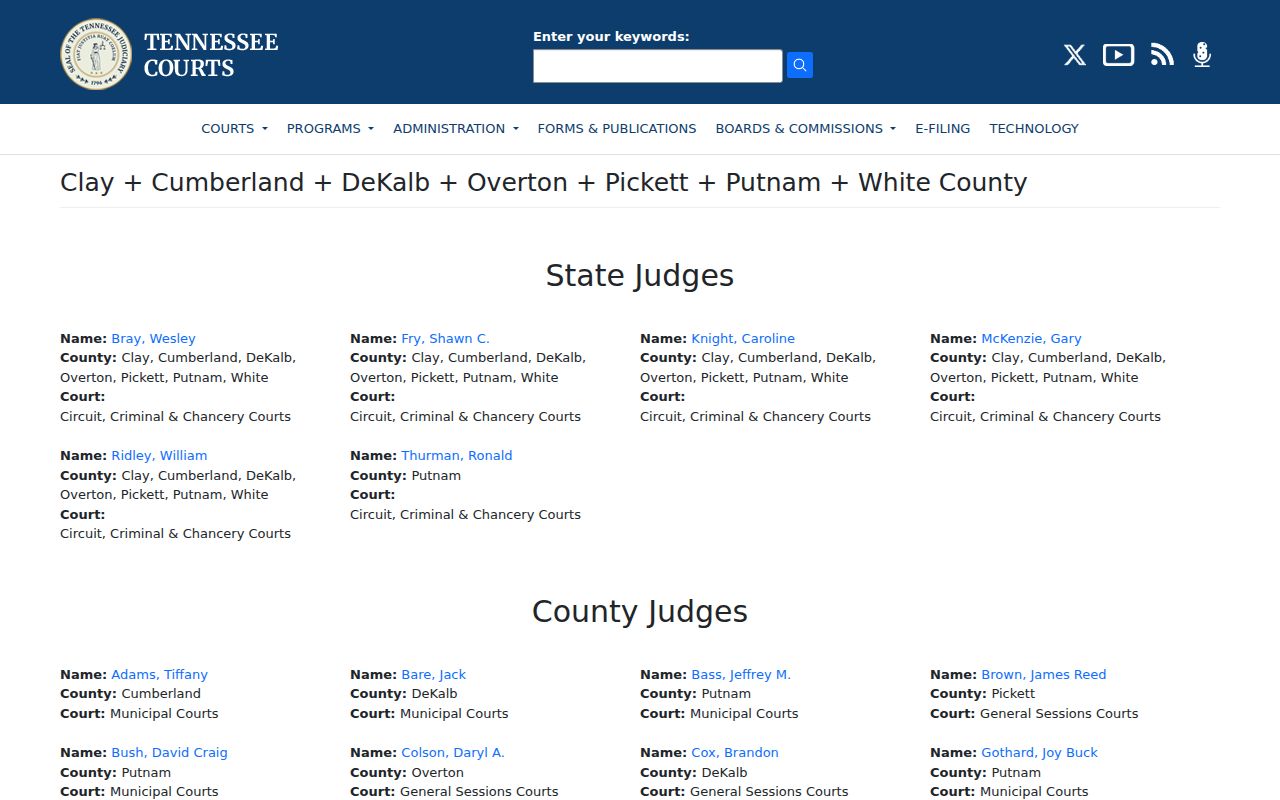
District staffing does not combine the separate White County clerk routes or case files.